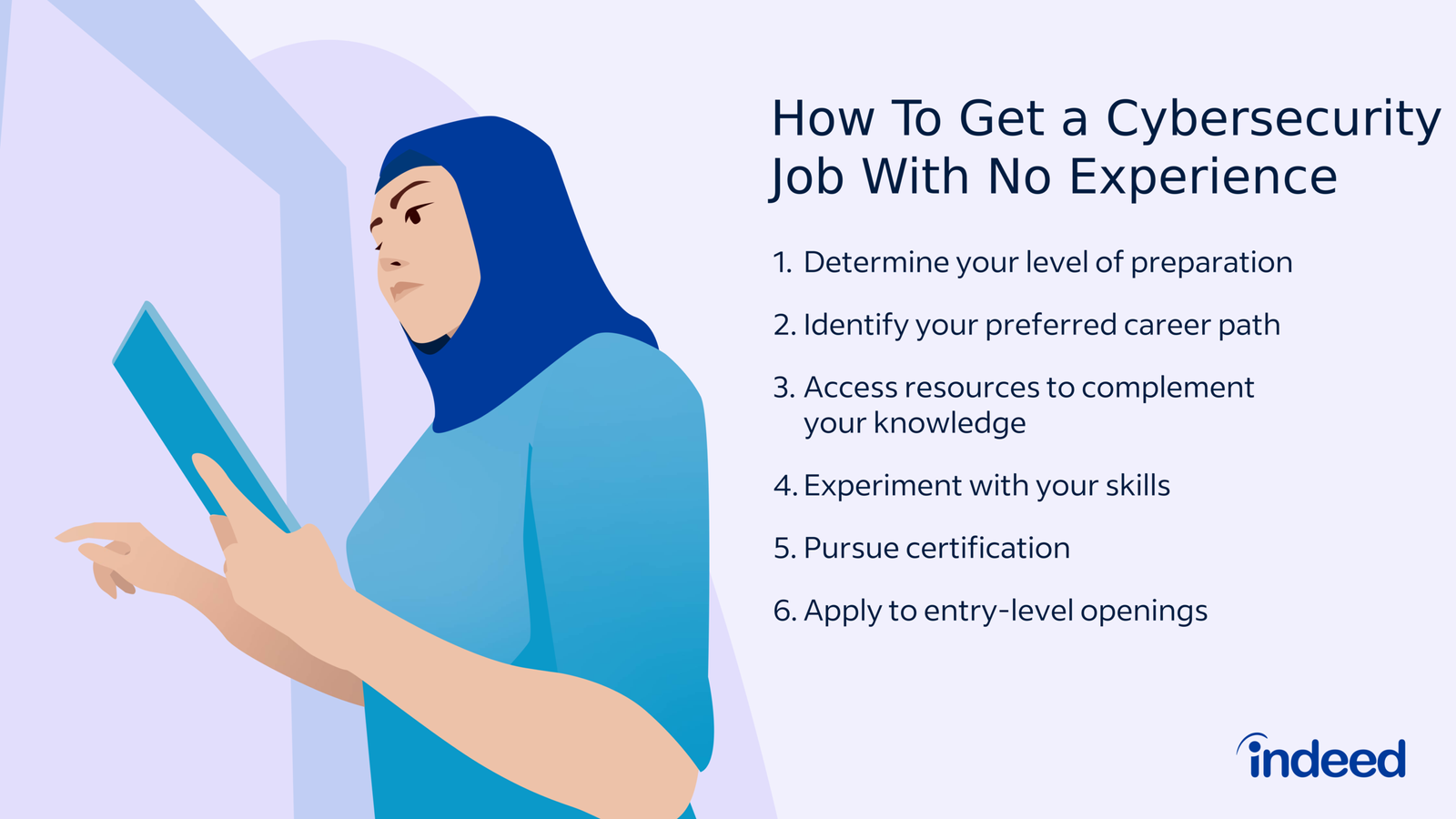
Introduction: Breaking the “Experience Paradox”
Cybersecurity Analyst Jobs No Experience The global cybersecurity workforce gap has reached critical levels, with millions of unfilled positions reported worldwide. Yet, for aspiring professionals, the industry often presents a frustrating paradox: entry-level job postings that demand 3–5 years of experience.
If you are searching for cybersecurity analyst jobs no experience, you are not alone, and more importantly, you are not out of luck. The landscape of information security is shifting. Employers are increasingly valuing practical skills, passion, and trainability over traditional tenure. Read More
A Cybersecurity Analyst (often called a SOC Analyst) is the first line of defense in an organization. While the role is critical, it is also the most common entry point into the industry. This guide will walk you through a proven roadmap to bypass the experience barrier, build a portfolio that turns heads, and secure your seat in the Security Operations Center (SOC).
—
What is a Cybersecurity Analyst?
To get the job, you must first understand the role. A Cybersecurity Analyst is a “Blue Team” defender responsible for protecting an organization’s hardware, software, and networks from cyber threats.
In an entry-level capacity, usually within a SOC (Security Operations Center), your primary responsibilities will include:
**Monitoring Network Traffic:** Watching for suspicious activity using SIEM (Security Information and Event Management) tools.**Incident Response:** Triaging alerts to determine if they are false positives or genuine threats.**Vulnerability Scanning:** Identifying weaknesses in the infrastructure before attackers do.**Reporting:** Documenting security breaches and the extent of the damage.
Why this matters for you: When you apply for jobs with no experience, you aren’t expected to be a master hacker. You are expected to be an observant, analytical monitor who understands the basics of networking and threat detection.
—
Why Experience Isn’t Always Mandatory (But Skills Are)
The phrase “no experience” is a misnomer. When recruiters see a resume for a junior role, they aren’t necessarily looking for previous paid employment in cyber; they are looking for competency.
If you lack corporate experience, you must manufacture your own experience through self-study and practical application. Employers are willing to hire candidates without a track record if they possess:
**Foundational IT Knowledge:** Understanding how the internet works (DNS, HTTP, IP addressing).**Analytical Mindset:** The ability to look at data and spot anomalies.**Curiosity and Grit:** The drive to learn new tools constantly.**Transferable Skills:** If you worked in customer service, you have communication skills. If you worked in help desk, you have troubleshooting skills.
Google SGE Tip: To rank for “cybersecurity jobs no experience,” focus on demonstrating *capability* rather than *history*.
—
Essential Certifications: The Gatekeepers
When you have no experience, certifications act as your validation. They tell the Applicant Tracking System (ATS) and the hiring manager that you possess the baseline knowledge required for the job.
1. CompTIA Security+ (The Gold Standard)
This is non-negotiable. The CompTIA Security+ is the most globally recognized entry-level certification. It covers the core principles of cybersecurity, including risk management, cryptography, and network security. Many government and defense contractor jobs (DoD 8570 compliance) require this certification by law.
2. CompTIA Network+ or CCNA
You cannot secure a network if you don’t understand how it operates.**Network+:** Good for general networking concepts.**Cisco Certified Network Associate (CCNA):** Harder, but carries more weight. It proves you understand switching, routing, and IP addressing at a deep level.
3. Google Cybersecurity Professional Certificate
A newer entrant, this Coursera-based program is excellent for absolute beginners. It provides hands-on labs, Python basics, and SQL introduction. While less “prestigious” than Security+, it is fantastic for learning the ropes.
4. Blue Team Level 1 (BTL1)
Unlike the multiple-choice format of CompTIA, the BTL1 is a practical, hands-on exam where you use a SIEM, analyze PCAPs (packet captures), and investigate incidents. This is highly respected by technical hiring managers.
—
Hands-On Projects: Building Your “Experience”
This is the most critical section of this guide. If you want cybersecurity analyst jobs with no experience, you must build a Home Lab. A home lab allows you to simulate a corporate environment and attack/defend it.
Step 1: Virtualization
Download VirtualBox or VMware Workstation Player (both free). These allow you to run operating systems inside your current computer.
Step 2: The Tools of the Trade
Install the following Virtual Machines (VMs) to practice:**Kali Linux:** The standard OS for penetration testing and security tools.**Windows 10/11:** To act as your “victim” machine.**Windows Server (Evaluation Version):** To learn Active Directory (AD). 90% of Fortune 500 companies use AD; you *must* understand how to secure it.
Step 3: Guided Learning Platforms
Don’t just guess; use platforms that provide structured “experience.”**TryHackMe:** Specifically, the **”SOC Level 1″** learning path. It guides you through using tools like Wireshark, Nmap, and Burp Suite.**HackTheBox (Sherlocks):** These are defensive labs specifically designed for blue teamers to practice digital forensics and incident response.**LetsDefend.io:** A platform that simulates a real SOC dashboard. You investigate alerts, check logs, and decide if an alert is true or false.
Step 4: The “Portfolio” Project
Create a project you can link on your resume.**Example:** “Deploying a SIEM with Azure Sentinel.”
* Set up a free Azure account.
* Create a virtual machine (Honeypot).
* Expose it to the internet.
* Ingest the logs into Azure Sentinel.
* Map the attacks on a world map using a PowerShell script.
* *Result:* You now have a talking point about cloud security, log ingestion, and threat visualization.
—
Networking and LinkedIn Optimization
Cybersecurity is a tight-knit community. Many cybersecurity analyst jobs no experience are filled through referrals before they ever hit the job boards.
Optimize Your LinkedIn Profile
**Headline:** Don’t just write “Aspiring Analyst.” Use: *Cybersecurity Analyst | Security+ | Network+ | Home Lab Enthusiast | Seeking SOC Roles.***About Section:** Briefly mention your background, but focus on your passion for security and the specific tools you are learning (e.g., “Currently building an Active Directory lab to simulate ransomware attacks”).**Featured Section:** Upload screenshots of your TryHackMe certificates or a PDF of your home lab architecture diagram.
Engage with the Community
**Join Discord Servers:** Communities like *IT Career Questions*, *The Cyber Mentor*, and *Black Hills InfoSec* are goldmines for advice.**Post Your Learning:** Did you learn how to use Wireshark today? Write a short LinkedIn post about it. “Just analyzed my first PCAP file and found a rogue TCP handshake. Here is what I learned…”**Attend Local Meetups:** Look for BSides events or OWASP chapter meetings in your city.
—
Tailoring a Resume for Entry-Level Roles
The biggest mistake candidates make is listing non-relevant duties from past jobs. You must tailor your resume to highlight transferable skills and technical competencies.
The “Skills” Section (Put this near the top)
Group your skills so scanners can read them easily:**Networking:** TCP/IP, DNS, DHCP, OSI Model, Subnetting.**Tools:** Wireshark, Splunk, Nmap, Nessus, Burp Suite.**Operating Systems:** Linux (CLI), Windows, macOS.**Soft Skills:** Critical Thinking, Incident Documentation, Shift Work.
Listing “Home Labs” as Experience
Create a section titled “Technical Projects & Labs” right under your certification section. Treat it like a job entry.
> Home Lab Environment | *Self-Hosted*
> * Designed and secured a virtualized network using VirtualBox and Kali Linux.
> * Configured a Splunk forwarder to ingest Windows Event Logs for analysis.
> * Simulated brute-force attacks and created custom alerts to detect multiple failed login attempts.
> * Completed the “SOC Level 1” path on TryHackMe (Top 5% rank).
This proves you can do the job, even without a formal employer.
—
Common Interview Questions for Junior Analysts
When interviewing for cybersecurity analyst jobs no experience, interviewers will test your foundational knowledge and your thought process.
1. The “CIA Triad”
**Question:** What is the CIA Triad?**Answer:** Confidentiality, Integrity, and Availability. Be prepared to give an example of a breach for each (e.g., Ransomware attacks Availability).
2. Port Numbers
**Question:** What port does HTTPS use? What about SSH?**Answer:** You must know the common ports by heart: 21 (FTP), 22 (SSH), 53 (DNS), 80 (HTTP), 443 (HTTPS), 3389 (RDP).
3. Malware Analysis
**Question:** How would you handle an alert regarding an infected endpoint?**Answer:** Focus on the process: Isolate the machine from the network to prevent spread, investigate the logs to find the source, remediate/clean the machine, and document the findings.
4. The “I Don’t Know” Strategy
You will be asked a question you don’t know. Never lie.**Good Answer:** “I am not familiar with that specific tool, but based on what it does, I would assume it functions similarly to [Tool X]. I would check the official documentation and internal knowledge base to verify before taking action.”
—
FAQ: Cybersecurity Analyst Jobs No Experience
Q1: Is it really possible to get a cybersecurity job with absolutely zero IT experience?
A: Yes, but it is harder. The most common path is IT Help Desk -> Cybersecurity. If you skip the Help Desk step, your certifications and home lab portfolio must be incredibly strong to prove you understand the fundamentals of computers.
Q2: Do I need a college degree?
A: For many private sector jobs, no. Experience and certifications often outweigh degrees. However, some HR departments and government roles still strictly require a Bachelor’s degree.
Q3: How much math and coding do I need?
A:**Math:** Very little. You need basic logic, but you won’t be doing calculus.**Coding:** For entry-level Analyst roles, you don’t need to be a developer. However, knowing how to read a script (Python or PowerShell) and understanding basic logic (If/Then statements) is highly beneficial for automation.
Q4: What is the salary for an entry-level Cybersecurity Analyst?
A: Salaries vary by location, but in the US, entry-level analysts typically earn between $60,000 and $85,000 annually.
Q5: How long does it take to get job-ready?
A: If you study consistently (10-15 hours a week), you can obtain the Network+ and Security+ and build a decent home lab portfolio in 4 to 6 months.
—
Conclusion: Your Roadmap to the SOC
Landing cybersecurity analyst jobs no experience is a journey of persistence. The industry is desperate for talent, but they are desperate for *competent* talent.
You do not need to wait for someone to give you permission to be a cybersecurity professional. Start today.**Study:** Get your Security+.**Build:** Set up your home lab and break things.**Network:** Connect with others on LinkedIn.**Apply:** Tailor your resume and show off your projects.
The gap between “no experience” and “hired” is bridged by your curiosity and your willingness to learn. The alerts are waiting—go get them. Read more
*
*Disclaimer: The cybersecurity field changes rapidly. Always verify specific certification requirements and job descriptions for the most current information.*